## Fuel Cost Surge: Dark Clouds Looming Over the South Korean Economy
[Background]
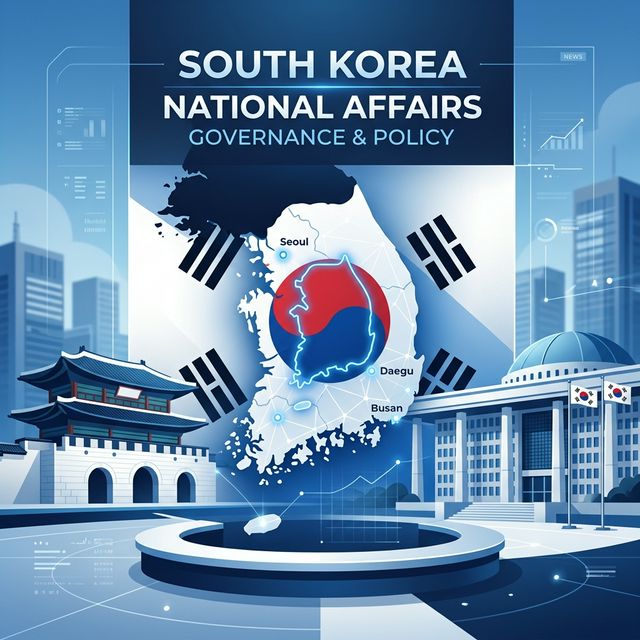
In March 2026, the South Korean economy faces a significant obstacle: a severe surge in fuel costs. As geopolitical instability in the Middle East intensifies, international oil prices surpass $150 per barrel, an unprecedented event. Domestic gasoline prices also exceed ₩3,000 per liter, burdening the common people's economy. This is more than just a rise in prices; it has a severe negative impact on the entire economy, including a chain reaction of price increases due to increased transportation costs, weakened consumer sentiment, and reduced corporate competitiveness. In particular, the suffering of low-income families and the self-employed, who are vulnerable in this era of high oil prices, is intensifying. The government has introduced an emergency supplementary budget as a drastic measure to overcome this crisis.
[Current Situation]
As of March 31, 2026, local time, the South Korean government approved a supplementary budget of ₩26.2 trillion through an emergency meeting of economic ministers. The core of this supplementary budget is the provision of public welfare subsidies to alleviate the economic burden on the people due to soaring fuel costs. According to the government's announcement, fuel cost subsidies will be paid in the form of local currency to the bottom 70% of income earners. Specifically, residents in the metropolitan area will receive ₩100,000, while residents in non-metropolitan areas will receive ₩150,000. In particular, vulnerable groups facing livelihood difficulties will receive up to ₩600,000. The government expects that this subsidy will help ease the burden on the common people's economy in this era of high oil prices and contribute to revitalizing the stagnant regional economy. However, there are many challenges to be addressed, such as funding arrangements, restrictions on the use of local currency, and controversies over fairness.
[Multi-faceted Analysis]
The government's decision to provide fuel cost subsidies has both positive and negative aspects. On the positive side, it can temporarily alleviate the economic burden on the common people who are struggling in this era of high oil prices. In particular, it can be expected to strengthen the social safety net by providing the minimum funds necessary for living to vulnerable groups. In addition, subsidies paid in the form of local currency can contribute to revitalizing local commercial districts and help increase sales for small business owners. However, negative aspects cannot be overlooked. First, issuing government bonds is inevitable in the process of raising a huge amount of ₩26.2 trillion, which can lead to an increase in national debt and deterioration of fiscal soundness. In addition, the standard of the bottom 70% of income earners is ambiguous, and there is a possibility that it will not be properly delivered to the groups that actually need support. Differentiated payments between metropolitan and non-metropolitan areas can also cause controversy over fairness, and consumers may experience inconvenience due to restrictions on the use of local currency. A more serious problem is that this subsidy cannot be a fundamental solution. Unless the cause of the surge in oil prices is resolved, the government's subsidy is only a temporary fix, and in the long run, it can further increase the economic burden on the people. A researcher at KDI (Korea Development Institute), who requested anonymity, expressed concern, saying, "This policy may have short-term effects, but in the long run, it can worsen fiscal soundness and distort the market." In addition, the political community is also raising criticism that this subsidy is a populist policy ahead of next year's local elections.
[Future Prospects]
The future oil price outlook remains uncertain, and as long as geopolitical risks in the Middle East persist, the high oil price situation is likely to continue for a long time. Therefore, the government should not only rely on short-term subsidies but also seek a fundamental energy policy shift. Efforts should be made to increase energy independence and strengthen resilience to external shocks through various efforts such as expanding investment in renewable energy, improving energy efficiency, and diversifying oil imports. In addition, a comprehensive policy package should be prepared to stabilize the people's economy, such as price stabilization measures, job creation, and strengthening the social safety net. In particular, support for vulnerable groups should be expanded, and policy support should be strengthened to enhance the competitiveness of the self-employed. Taking this fuel cost subsidy as an opportunity, the government should establish a sustainable growth base through a fundamental review of energy policy and economic policy as a whole. The following points should be noted in the future:
1. Trends in international oil prices: If geopolitical instability in the Middle East continues, the rise in oil prices may intensify further. 2. Government's additional economic measures: If the rise in oil prices continues, the government is likely to introduce additional economic measures. 3. Measures to promote the use of local currency: Efforts are needed to revitalize the local economy, such as expanding the use of local currency and attracting franchisees. 4. Energy policy shift: The government's efforts to increase energy independence, such as expanding investment in renewable energy and improving energy efficiency, are important.
In conclusion, this fuel cost subsidy is a policy that can temporarily alleviate the difficulties of the common people's economy in this era of high oil prices, but it should be kept in mind that it cannot be a fundamental solution. The government should establish a sustainable growth base through a fundamental review of energy policy and economic policy as a whole from a long-term perspective.